
Standing ovations
And where to put them

My friend and design crush Jenny Sauer-Klein recently ran The Conference for Conferences — a conference on how we can make conferences less shitty. (Her event offerings also include the Offsite for Offsites — so please join me in petitioning for The Dumpster Fire for Dumpster Fires and the Email for Emails).
Meanwhile… this week in our retreat we’re talking about the moments that are highest leverage across experiences — whether you’re designing a birthday party or a board meeting, and the importance of the order you put them in.
So the thing from The Conference for Conferences that I can’t stop thinking about is her invitation for standing ovations.
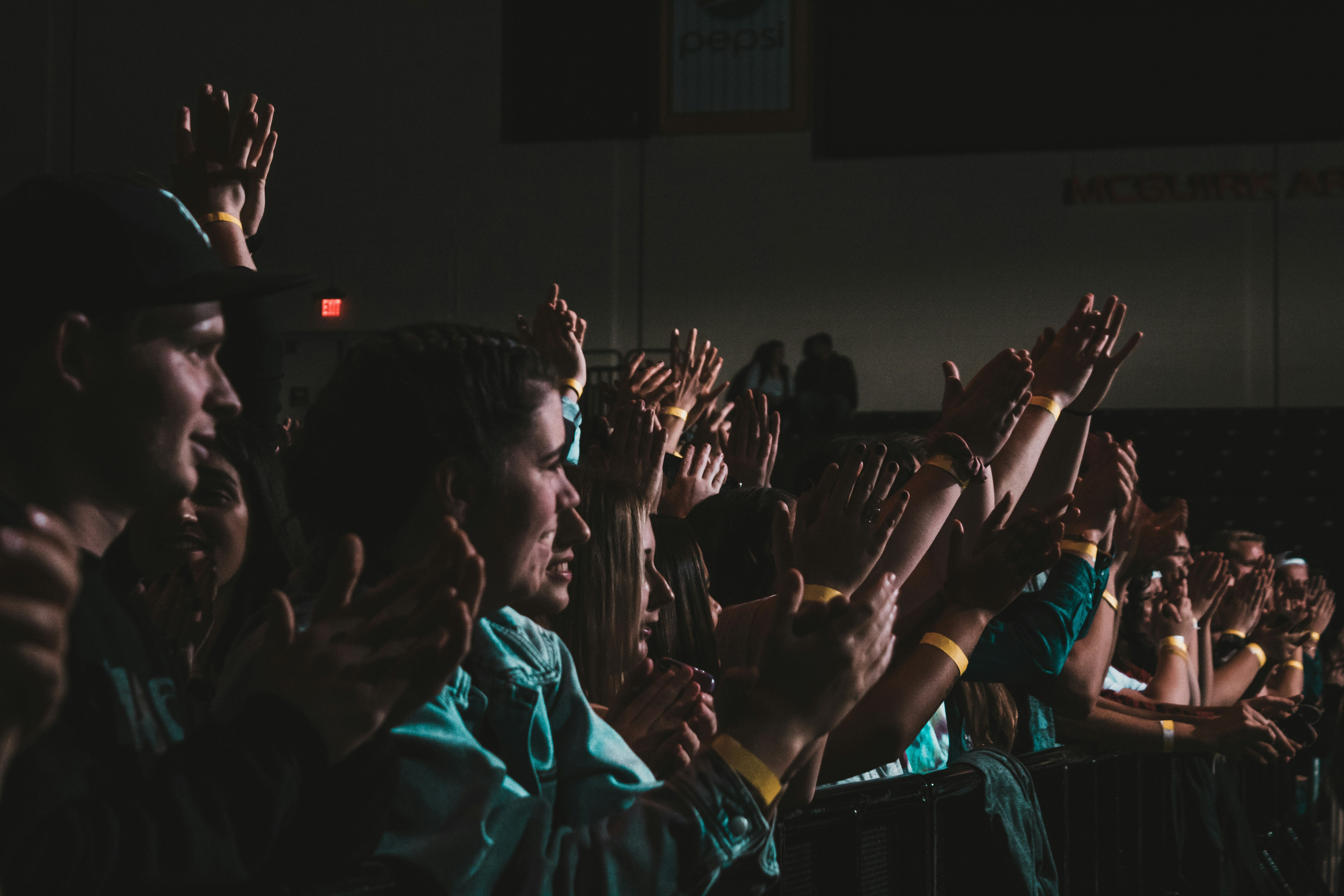
She initiated the practice of giving every speaker a standing ovation... at the beginning. When they’d stepped on stage, but before they had said a word.
This is brilliant on 900 levels.
And here’s why:
It emphasizes the importance of the beginning
How we begin changes how we experience everything that comes after.
Imagine that instead, before every speaker began, we stood up and boo’d them whilst throwing smelly socks on stage. Or we spent ten minutes in our inboxes, getting progressively more stressed about some fire alarm or dumb thing someone has done or the state of the world (newsflash… this is what is normally happening in the moments prior).
The way we’d feel about, and experience, the content that comes next would be significantly altered.
So putting our applause first? It uses this priming power for good, not evil.
It re-orients our relationships
Starting with a standing ovation signals to our brains that we adore whatever is happening.
And in doing so it sets us up to be more attentive, more curious, and more connected to whatever follows. Because we have been subconsciously nudged to be stoked about this new human we’re about to meet.
We already love them! We’re already obsessed! This is our homie!
It’s a gift to the speaker, which is a gift to the audience
To feel loved before you begin? To not have to start speaking from a place of thinking “Oh god I hope they like me, I hope I do okay”?
What a fricken treat.
It makes you feel like YOU are good — beyond how well you perform today. Your survival instincts (freeze, fight, or flight) that are seeking connection as protection aren’t ringing the alarm bells — because you understand that you belong, and you are beloved.
And don’t worry, this won’t make you a lazy speaker. Instead it will make you exceptional.
Because confidence is sexy. And feeling hyper connected to the people you’re speaking to creates intimacy, directness, and honesty in the delivery.
It uses our bodies as a tool for transition
Usually as the day stretches on, the more speakers we’ve heard and the longer we’ve sat here, the more our bodies become slugs that have fused with the seats, our brains dissolve into sludgy bowls of oatmeal, and all the content blurs together in one long march of boredom.
And by the time we get to the end, that poor final speaker is giving a talk to a room of exhausted sacs of goo.
Instead, a standing ovation before every speaker has us out of our seats at every transition. It flushes our nervous systems. Reiterates to our bodies that SOMETHING NEW IS HAPPENING, GET THAT OLD GUNK OUTTA HERE. It’s a little shot of adrenaline to the system, and a refocusing of energy.
It leverages ritual to create community
Rituals are the things we do together. Repeatedly. That make meaning.
Rituals are what create culture. And culture is the thing that connects us. It’s what sets the conditions for realer relationships, not icky networking dressed up in an outdated wig and calling itself community.
It’s a reminder to shake up the order
For most things we are making, there is an expected order. This happens first, then this, then that, then this other thing, then the ending, then bye bye, see you later, that was boring let’s never speak of it again.
Jenny talks about this in the context of standard conference structures as “The Flat Line.” We keep doing it, despite the fact that no one’s out here like “Oh wow, I’m so glad we have this panel and this happy hour — what great news this is so amazing.” No, we’re like… “Well sure, this is fine, I guess. But maybe I should dip out and go get a street hot dog instead.”
Changing the order not only can fundamentally change the experience (see all the points above), but it also signals to our brains that this will be different. So we better pay attention.
Because when our brains see the expected, they tune out. Why spend precious energy on this thing we already understand? Looks like boredom? Smells like boredom? Probably acts like boredom.
But when it’s immediately obvious that we’re not in Kansas anymore? Buckle up butter cup, we better lean in!
Your assignment, should you choose to play:
Whatever you’re designing — a learning program, a classroom, a strategy meeting, a halloween party…
How can you make the beginning more interesting? Incept connection? Leverage our bodies? Lean into ritual?
How can you mix up the order of events, for a wilder, far more interesting ride?
Let me know what you try. I’m out here giving you a standing ovation before you’ve even begun.
Yours, Olivia
Upcoming workshop: 🚪 The Architectures of Endings 🚪— mini version!
Speaking of beginnings… missed the deep dive workshop this week on The Architectures of Endings inside The Good Chaos Club?
You’re in luck! I’m running a micro version on November 12th! For free!
Come for:
New frameworks on how to design for kickass endings
Tools for creating closure
A helluva good time on the internet
Making time for making whatever you’re making… way better
November 12th @ 10 am PT.